


Growing an eCommerce store is not just about running ads or improving your website. It also requires smart marketing strategies that help you attract customers consistently. That’s why many online businesses use affiliate programs and referral programs to increase sales and expand their reach.
An affiliate program allows partners like bloggers, influencers, and content creators to promote products and earn commissions for every sale they generate. A referral program, on the other hand, encourages existing customers to recommend products to their friends and family in exchange for rewards or discounts.
While both strategies help businesses gain new customers, they work in different ways and focus on different goals. In this guide, we’ll compare affiliate programs and referral programs, explore their benefits, and help you decide which approach is best for your eCommerce store.
What Is an Affiliate Program?
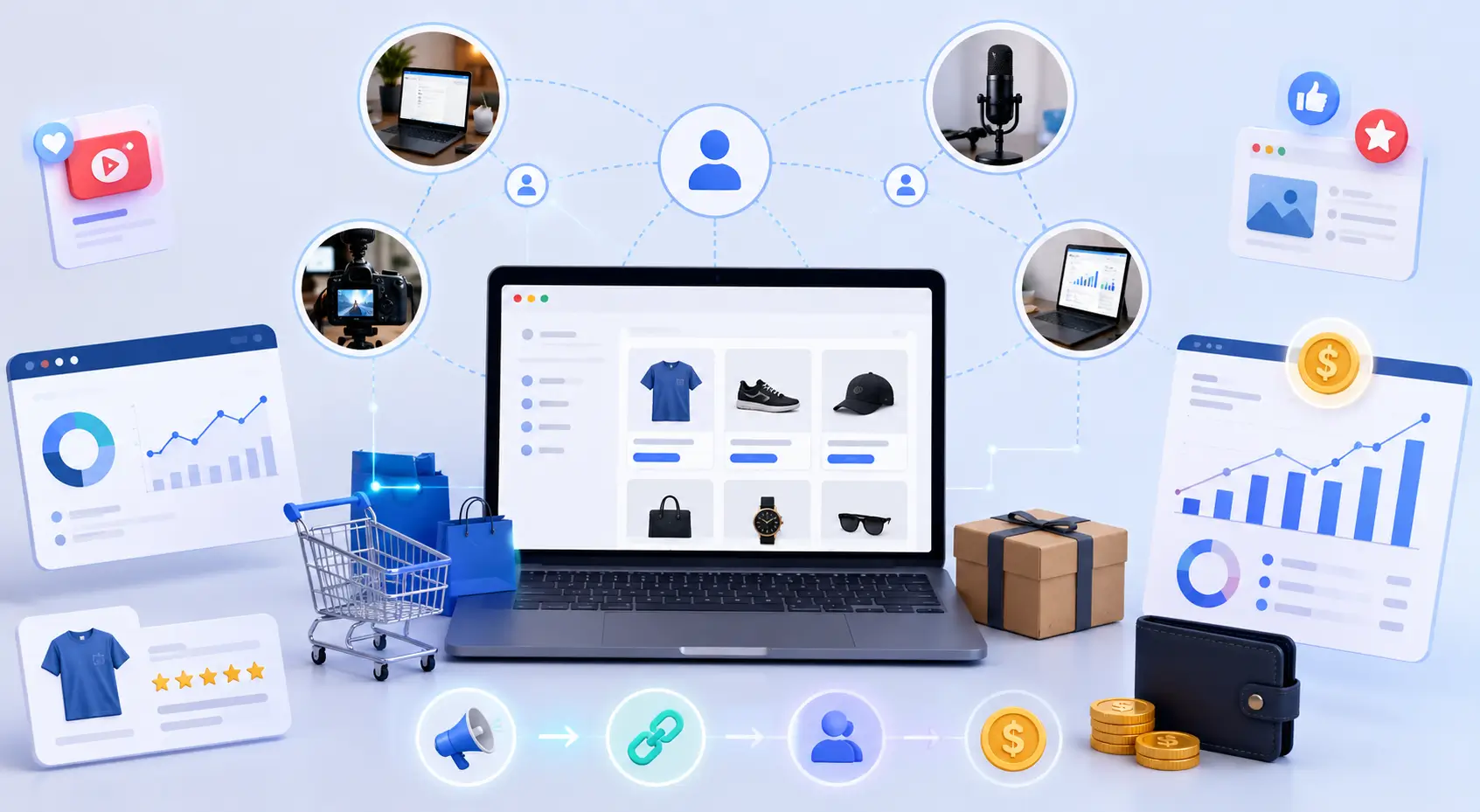
An affiliate program is a marketing strategy where businesses partner with individuals or companies, known as affiliates, to promote their products. Affiliates earn a commission whenever they generate a sale or lead through their promotional efforts.
How Affiliate Programs Work
Affiliate marketing usually works in three simple steps:
1. Businesses partner with affiliates
Affiliates can be bloggers, influencers, YouTubers, marketers, or content creators who have an audience interested in your products.
2. Affiliates promote products using unique links or codes
Each affiliate receives a trackable link or discount code, allowing businesses to identify which sales come from their promotions.
3. Affiliates earn commissions from successful referrals
When customers purchase through an affiliate link or code, the affiliate receives a commission. This can be a percentage of the sale or a fixed amount per sale or lead.
Because affiliate marketing is performance-based, businesses only pay when affiliates deliver measurable results.
Benefits of an Affiliate Program
- Expands brand reach: Affiliates introduce your products to new audiences that may be difficult to reach through traditional marketing.
- Generates new customers: Trusted recommendations from affiliates can help increase conversions.
- Cost-effective marketing: Businesses pay based on actual results rather than upfront advertising costs.
- Builds valuable partnerships: Strong affiliate relationships can create long-term brand promoters.
Examples of Affiliate Marketing for eCommerce Stores
Affiliate marketing can appear in several formats, such as:
- Product reviews: Bloggers or YouTubers review products and share affiliate links with their audience.
- Blog recommendations: “Best products” or “top picks” articles featuring affiliate links.
- Social media promotions: Influencers showcase products through posts, videos, or unboxing content.
- Coupon promotions: Deal websites share affiliate discount codes to drive sales.
What Is a Referral Program?
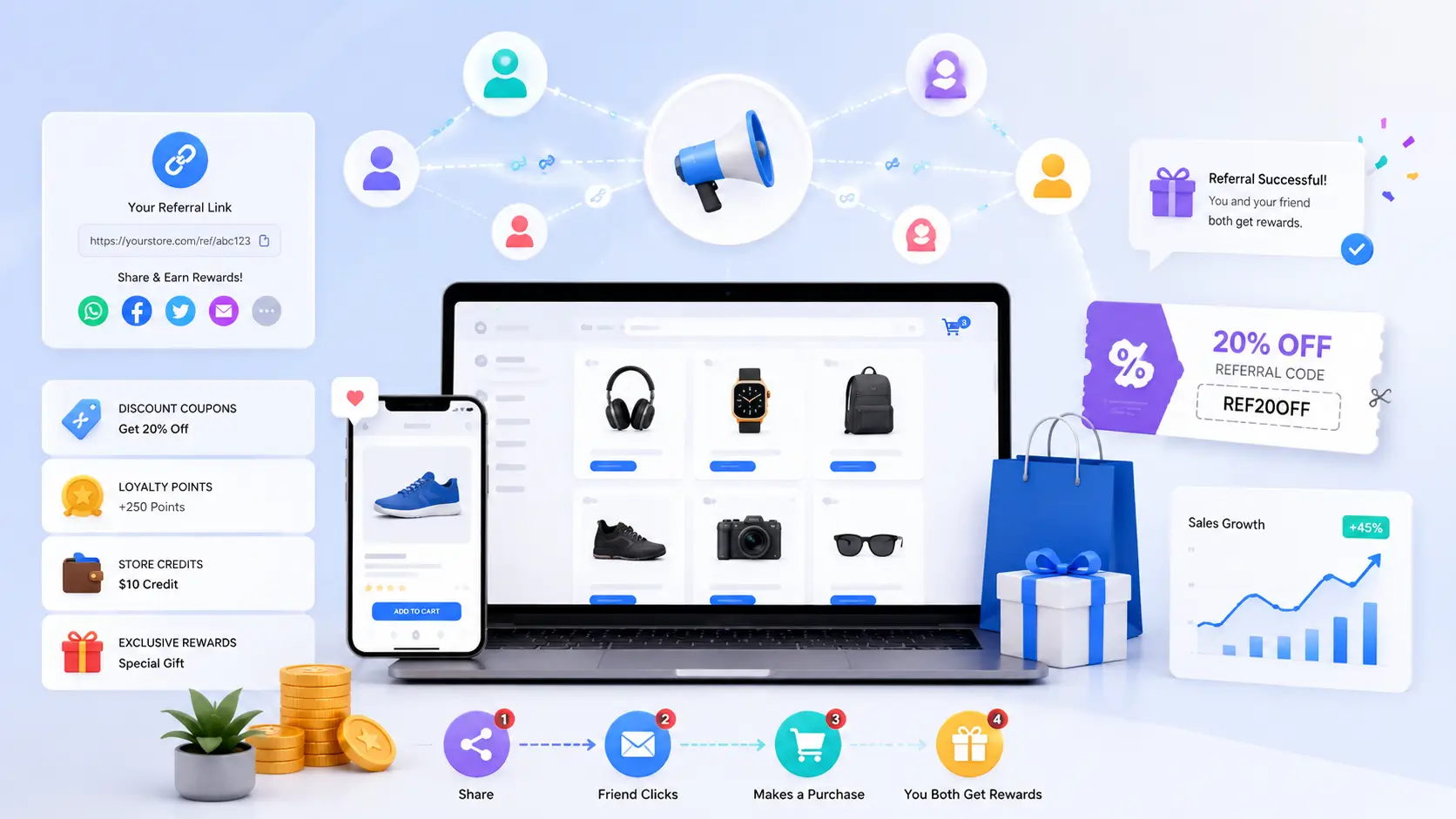
A referral program encourages existing customers to recommend your products to their friends, family, or personal networks in exchange for rewards. Unlike affiliate marketing, which focuses on external partners, referral marketing uses the trust and relationships your current customers already have.
How Referral Programs Work
Referral programs usually follow three simple steps:
1. Existing customers recommend products
Customers share referral links or unique codes with friends and family. These links or codes help track successful referrals.
2. New customers make purchases through referral links or codes
When a new customer uses the referral link or code to complete a purchase, the referral is recorded.
3. Existing customers receive rewards
The referring customer earns rewards such as discounts, store credits, or loyalty points as a thank-you for bringing in a new customer.
Because referrals come from trusted sources, they can be an effective way to build customer confidence and encourage purchases.
Benefits of a Referral Program
- Builds customer loyalty: Rewarding customers for referrals strengthens their connection with your brand.
- Encourages repeat purchases: Discounts and store credits can motivate customers to return and shop again.
- Leverages word-of-mouth marketing: People often trust recommendations from friends and family more than traditional advertisements.
- Creates stronger customer relationships: Referral programs make customers feel more connected to your brand.
Examples of Referral Marketing for eCommerce Stores
Common referral program formats include:
- “Refer a friend and get 10% off” — Offering discounts to both the existing customer and the new customer.
- Customer reward points — Giving points for successful referrals that can be redeemed later.
- Store credits — Adding credit to a customer’s account for future purchases.
- Exclusive discounts — Providing special offers to customers who participate in referral campaigns.
Affiliate Program vs Referral Program: Key Differences
|
Factor |
Affiliate Program |
Referral Program |
|
Target Audience |
Marketers, influencers, content creators, partners |
Existing customers |
|
Main Goal |
Acquire new customers and increase brand reach |
Build customer loyalty and encourage repeat purchases |
|
Reward Type |
Sales commission or fixed referral payments |
Discounts, store credits, loyalty points, or rewards |
|
Relationship |
Business-to-partner relationship |
Business-to-customer relationship |
|
Promotion Method |
Blogs, product reviews, social media, content marketing |
Personal recommendations, referral links, and word-of-mouth |
While both programs aim to drive sales through other people’s promotion, affiliate programs are built around external partners and paid commissions, whereas referral programs are built around your existing customer base and personal trust.
Affiliate Program vs Referral Program: Which One Should You Choose?
There is no single “better” option — the right choice depends on your business goals, customer base, and growth stage.
Choose an Affiliate Program If:
- You want to reach a larger audience beyond your existing customers.
- You want influencers, bloggers, or marketers to promote your products.
- Your main goal is customer acquisition and increasing brand visibility.
Choose a Referral Program If:
- You already have satisfied customers who trust your brand.
- You want to increase repeat purchases and customer lifetime value.
- You want to grow through personal recommendations and word-of-mouth marketing.
If you are a new store looking to build awareness, an affiliate program can help you reach new audiences and attract potential customers. If you already have a loyal customer base, a referral program can turn those customers into valuable brand advocates.
Can You Use Affiliate and Referral Programs Together?
Yes — and in many cases, using both programs together can be an effective growth strategy. Instead of seeing them as competing options, businesses can use them as complementary tools that support different stages of the customer journey.
Affiliate programs help attract new audiences by allowing creators, bloggers, and marketers to introduce your products to potential customers.
Referral programs help turn existing customers into brand advocates by encouraging them to recommend your store to friends, family, and their personal networks.
By combining both strategies, businesses can create a complete marketing approach. Affiliates help generate new traffic and customers, while referral programs strengthen customer loyalty and encourage repeat purchases.
Many eCommerce businesses use both affiliate and referral programs to expand their reach, build customer relationships, and create sustainable long-term growth.
How StoreEngine Helps eCommerce Businesses Grow
Managing an eCommerce store involves more than just selling products — businesses also need efficient systems to handle products, orders, payments, and customer experiences. This is where StoreEngine can help simplify store operations.
- Build and manage an online store easily without requiring advanced technical skills.
- Manage products, orders, payments, and inventory from one centralized platform.
- Support growth strategies by providing the foundation businesses need to run promotions, improve customer experiences, and increase sales.
- Save time on daily operations, so store owners can focus more on marketing, customer relationships, and business growth.
By simplifying store management and reducing operational complexity, StoreEngine helps eCommerce businesses create a strong foundation for long-term growth.
Best Practices for Running Successful Affiliate or Referral Programs

Whether you choose an affiliate program, a referral program, or both, following these best practices can help you achieve better results:
- Offer attractive rewards: Whether it’s a commission for affiliates or discounts and credits for customers, make sure the reward provides enough value to encourage participation.
- Make signup simple: A complicated registration or referral process can reduce participation. Keep the process quick and easy to complete.
- Provide marketing materials: Give affiliates resources like banners, product images, and promotional content. For referral customers, provide easy-to-share links or messages.
- Track performance: Monitor which affiliates or referral sources generate the most sales and engagement to understand what works best.
- Optimize campaigns regularly: Review performance, test different approaches, and adjust rewards or messaging to improve results over time.
Conclusion
Affiliate programs and referral programs can both help eCommerce businesses grow, but they work in different ways. Affiliate programs use external partners and creators to reach new audiences and generate sales through commissions, while referral programs use existing customers to build trust, loyalty, and repeat purchases.
The right choice depends on your business goals. If you want to expand your reach and attract new customers, an affiliate program can be a great option. If you already have loyal customers and want to encourage word-of-mouth growth, a referral program may be the better fit.
For businesses looking to maximize growth, combining both strategies can create a balanced approach — bringing in new customers while strengthening relationships with existing ones.
Whatever approach you choose, make sure it supports your current needs and long-term business goals.
FAQ Section
What is the difference between an affiliate program and a referral program?
An affiliate program works with external partners like influencers, bloggers, or marketers who earn commissions for promoting products. A referral program encourages existing customers to recommend products to friends or family in exchange for rewards, discounts, or credits.
Are affiliate programs better than referral programs?
Neither option is always better — it depends on your business goals. Affiliate programs are ideal for reaching new audiences and acquiring customers, while referral programs are better for building customer loyalty and encouraging repeat purchases.
Can an online store use both affiliate and referral programs?
Yes. eCommerce businesses can use both programs together — affiliates help attract new customers, while referral programs encourage existing customers to become brand advocates.
How do affiliate marketers get paid?
Affiliate marketers usually earn a commission when customers purchase through their unique affiliate links or codes. Payments can be based on a percentage of the sale or a fixed amount per sale or lead.
How can referral programs increase eCommerce sales?
Referral programs encourage satisfied customers to recommend products to their network. Since these recommendations come from trusted sources, they can help increase customer confidence, conversions, and long-term loyalty