

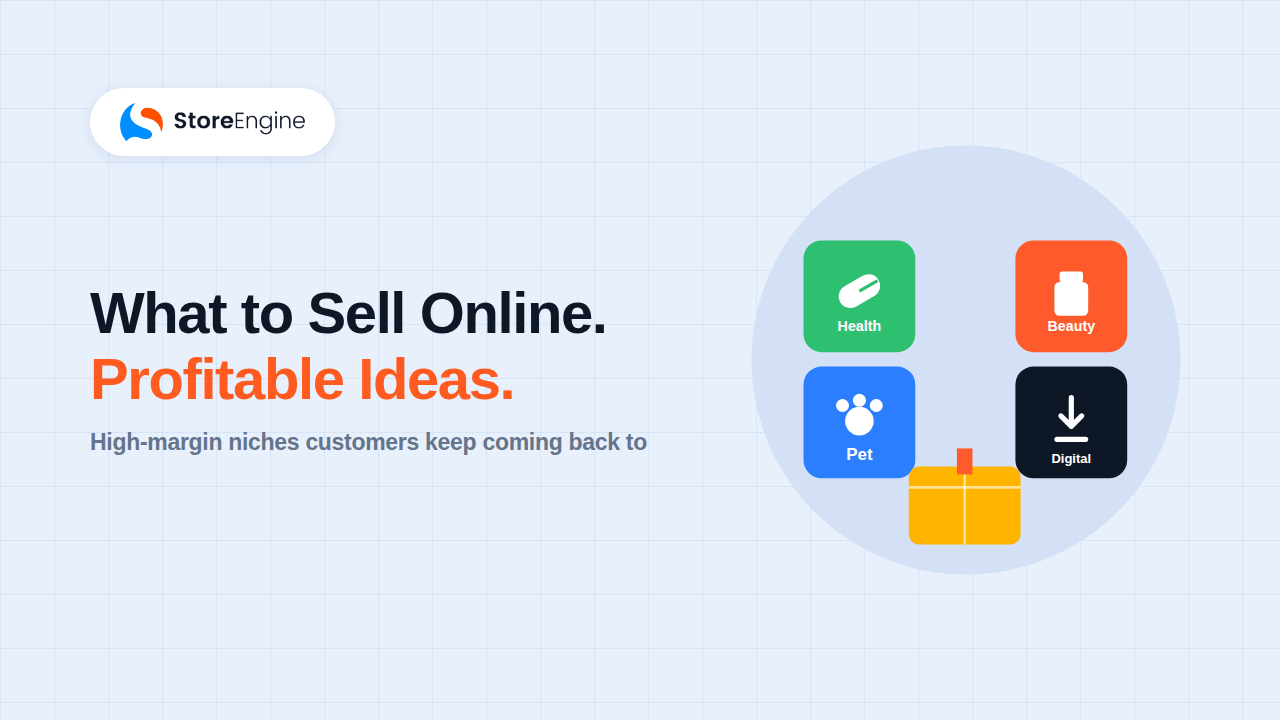

The most profitable products to sell online in 2026 share three traits: 60%+ gross margins, strong repeat-purchase potential, and an underserved audience. The standout categories this year are health and wellness, beauty and skincare, pet supplies, digital and print-on-demand products, and subscription boxes — because they combine high margins with buyers who come back. Here are the profitable product ideas worth building a store around, and how to validate one before you commit.
💡 Quick Takeaway:
Chasing viral products is a treadmill. The categories that build durable stores are the ones with repeat purchases — a customer who buys skincare or pet food once will buy again every month. That recurring demand, not one-time virality, is what turns a product idea into a profitable business.
What makes a product profitable to sell online?
Before any specific idea, it helps to know what “profitable” actually means for an online store. A product can trend hard and still lose money if the margins are thin or the customer never comes back. The most profitable products consistently share three traits.
Hold every idea below up against these three filters. The categories that score on all three are where durable, profitable stores get built.
The most profitable product categories in 2026
1. Health and wellness
Health and wellness consistently tops profitability rankings because it hits all three filters at once: high margins, built-in repeat purchases (supplements run out monthly), and endless niche segments. Health-conscious consumption has moved from a niche to mainstream demand. Winning sub-niches include vitamins and supplements, functional foods, fitness accessories, and sleep and recovery products. The category rewards brands that build trust through education and social proof, since buyers are cautious about what they put in their bodies.
2. Beauty and skincare
Beauty and skincare pair strong margins with some of the highest repeat-purchase rates in eCommerce. A customer who finds a moisturizer they love reorders it indefinitely. The category thrives on visual platforms — a single TikTok or Instagram clip showing a visible result can drive thousands of conversions. Clean, natural, and ingredient-transparent products are the fastest-growing segment as consumers scrutinize labels more closely. The trade-off is competition, so a specific angle (a target skin concern, a clean-ingredient promise) matters.
3. Pet supplies
Pet owners spend reliably and emotionally, which makes pet supplies one of the most durable niches on any profitability ranking. The category consistently outperforms on lifetime value and margin. Consumable pet food and treats drive recurring revenue, while accessories, toys, and grooming products lift average order value. Eco-friendly and premium/health-focused pet products are the growth edge as owners increasingly treat pets as family.
4. Digital products and print-on-demand
For creators and lean startups, digital and print-on-demand (POD) products are the most accessible high-margin opportunity in 2026. There is no inventory, no warehousing, and no shipping to manage. Once created, a digital product — a template, printable, course, or design — sells repeatedly at almost zero additional cost, which is why margins approach 90-100%. POD merchandise (apparel, wall art, accessories) lets you test designs without buying stock upfront. Social platforms fuel this category: one short video showcasing a planner or T-shirt design can generate organic views and sales for weeks.
5. Subscription boxes and consumables
Subscription boxes turn the profitability equation in your favor by design — they convert a one-time buyer into predictable recurring revenue. The model works best around consumables and curated discovery: coffee, snacks, beauty samples, pet treats, hobby supplies. The recurring nature smooths cash flow and dramatically raises customer lifetime value, which is why subscription-friendly categories consistently outperform on LTV. The challenge is churn, so the ongoing value has to stay high enough that customers do not cancel.
6. Eco-friendly and sustainable goods
Sustainability has shifted from a marketing angle to a genuine purchase driver, influencing decisions across nearly every category. Reusable household products, sustainable fashion, plastic-free packaging, and refillable goods all ride this demand. The advantage is a built-in brand story and a customer base willing to pay a premium for values alignment — which supports the higher margins that make a store profitable.

How do you validate a product idea before committing?
The most expensive mistake in eCommerce is falling in love with a product before checking whether anyone wants to buy it. Validation is how you replace guessing with evidence. Work through these steps before investing in inventory.
How to profit from whatever you choose
Picking the right category is half the equation. How you sell it determines whether the margin survives contact with reality. A few mechanics apply across every profitable niche:
Selling any of these on WordPress with StoreEngine
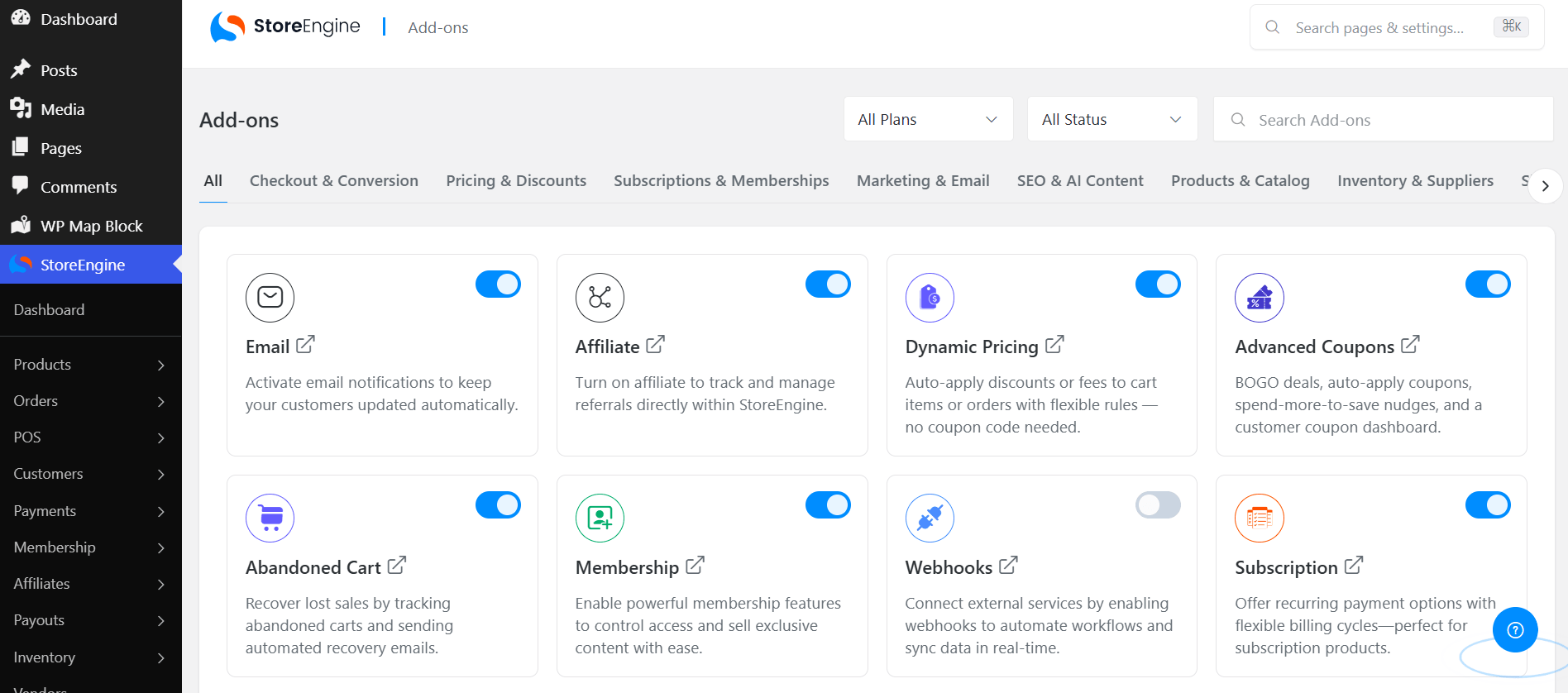
The categories above span physical goods, digital products, and subscriptions — which is exactly why your store platform needs to handle all three without a rebuild. StoreEngine covers the full range from one WordPress install.
Because all of it runs on one platform, you can start with a single category and expand into others — add a subscription tier, launch a digital product, bundle an eco line — without migrating to a new system each time your catalog grows.
Frequently asked questions
What is the single most profitable thing to sell online in 2026?
There is no universal answer, but digital products offer the highest margins (approaching 90-100%) because they have no inventory or shipping costs, while health and wellness and beauty offer the best combination of margin and repeat purchases. The most profitable choice for you depends on your audience and expertise — a category you understand deeply will almost always outperform a trending product you picked because it looked easy.
Should I sell trending products or evergreen products?
Both, ideally. Evergreen categories (health, beauty, pet, consumables) provide stable, repeat-purchase revenue that sustains a business long term. Trending products can generate fast bursts of sales and cash, but demand fades. The strongest approach is an evergreen core catalog with occasional trend products layered on top to capture short-term momentum without betting the whole business on a fad.
How much money do I need to start selling these products?
It depends heavily on the model. Digital products and print-on-demand require almost no upfront capital — no inventory, no warehousing. Physical products with your own inventory typically need more, though dropshipping lets you test physical products with minimal upfront cost. A common low-risk path is to validate with digital or dropshipped products, then reinvest early profits into bulk inventory for your proven sellers.
How do I know if a product will actually sell before I invest?
Validate with evidence, not intuition. Check search demand on Google Trends, confirm healthy (not zero) competition, calculate whether the real margin clears 60%, and run a small test — list the product and drive a little traffic to see if people buy — before committing to inventory. Dropshipping and print-on-demand are ideal for this testing phase because they carry no upfront stock risk.
The most profitable products to sell online in 2026 are not the flashiest — they are the ones with healthy margins and customers who come back. Health, beauty, pet, digital, and subscription categories check those boxes, but the real winner is a niche you understand and can serve better than the competition. Validate before you commit, build in repeat-purchase mechanics from day one, and choose a store platform that grows with your catalog instead of boxing you into a single product type.