


Getting your first 100 sales comes down to three things: a frictionless store, a tight initial audience, and consistent follow-through on the handful of channels that actually move product for new stores. The average eCommerce conversion rate is 1.4-2% for first-time visitors — meaning every decision that reduces checkout friction or brings more qualified traffic directly compounds into more sales. This guide shows you exactly where to start.
💡 Quick Takeaway:
Your first 100 sales are harder than the next 1,000 — because you are building trust from zero. The stores that get there fastest are not the ones with the biggest ad budget. They are the ones that start narrow, eliminate checkout friction early, and recover every abandoned cart from day one.
Why do most new stores stall before 100 sales?
The most common failure is not a bad product. It is a leaky store. The average cart abandonment rate across eCommerce is 70% — meaning seven out of every ten shoppers who add something to their cart leave without buying. For new stores, that number is often higher because trust signals are thin and checkout flows are unoptimized.
First-time visitors convert at just 1 to 2%, while returning customers convert at 4.5 to 6%. That gap tells you everything: the first sale to any customer is the hardest because they do not yet trust you. Once they have bought once and had a good experience, the next purchase is two to three times more likely. So the real goal of your first 100 sales is not just revenue — it is building a base of people who have experienced your store and trust it.
The fastest path there is to fix what leaks first, then bring traffic in. Most new stores do it backwards — they pour money into ads before their checkout is clean, their product pages have reviews, or their abandoned cart emails are set up. Every visitor you lose to a bad experience is a visitor you paid to acquire and then handed to a competitor.
Step 1: Fix the checkout before you run any traffic
The checkout page is where most revenue is lost. Baymard Institute research shows that 48% of cart abandoners leave because of unexpected extra costs, and 24% leave because they were forced to create an account. These are fixable problems, and fixing them before you run any paid traffic is the highest-leverage thing a new store can do.
What a low-friction checkout looks like
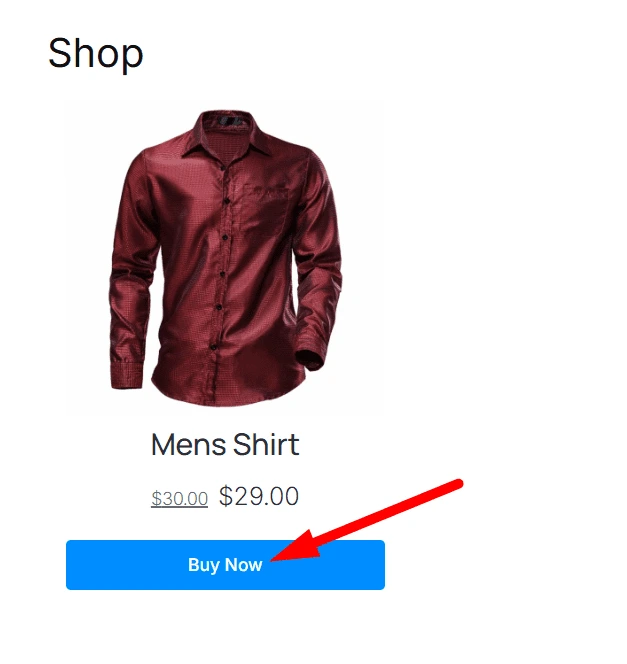
StoreEngine’s checkout is built with this in mind — clean, fast, and designed to minimize the steps between cart and completed order. The Instant Checkout feature lets customers skip the cart page entirely and jump straight to payment from a product page, which is particularly effective for single-product or impulse purchases. Embeddable Checkout lets you embed the payment form directly on a landing page, removing yet another step from the path to purchase.
Step 2: Start with a narrow audience, not a broad one
New stores fail at paid traffic because they target too broadly. A broad audience might be cheap per click, but it converts at 0.5% or less because most of those people were never going to buy. A narrow, specific audience — people who have already demonstrated interest in exactly what you sell — converts at two to three times that rate, making your early budget work much harder.
Where to find your first narrow audience
Step 3: Set up abandoned cart recovery before you launch
This is the single easiest win available to a new store, and most new stores do not set it up until they are already losing hundreds in abandoned revenue. With a 70% average cart abandonment rate and a 10-30% recovery rate from email sequences, abandoned cart recovery can add meaningful revenue with zero additional traffic spend.
The math is simple: if 100 visitors add to cart and 70 abandon, a 15% recovery rate means 10 additional sales from people who were already interested enough to add your product. That is 10% more revenue from traffic you already paid for.
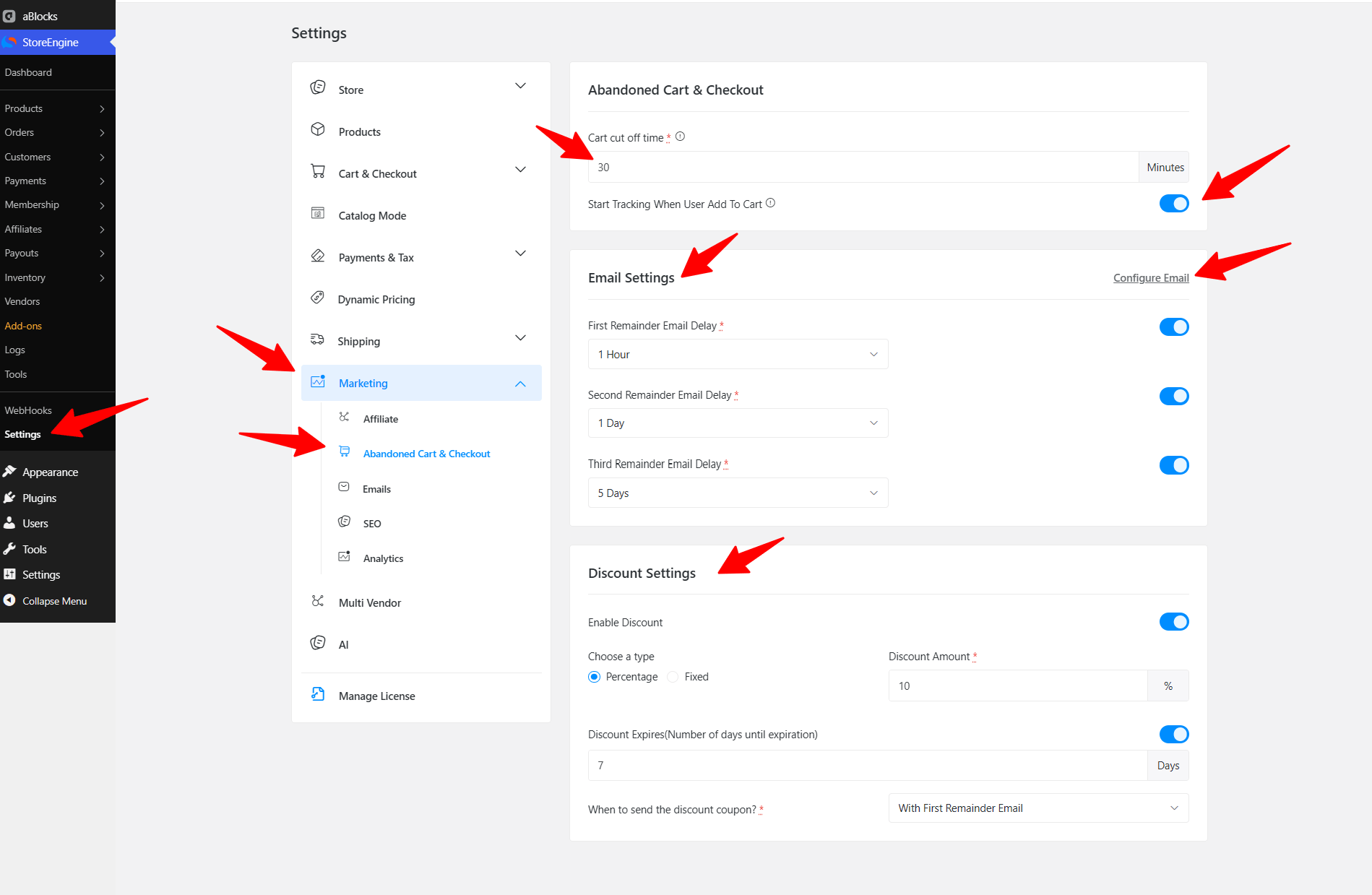
StoreEngine’s Abandoned Cart addon automates this entirely. Set a cart cut-off time (typically 30-60 minutes of inactivity), configure up to three recovery emails at different intervals (1 hour, 24 hours, 5 days), and optionally attach a discount coupon to the final email as a last-resort incentive. The whole sequence runs automatically — you set it up once and it recovers revenue in the background continuously.
Step 4: Use order bumps and coupons to increase revenue per sale
Getting to 100 sales is partly about volume, but it is also about average order value. A store that converts at 2% but averages $80 per order reaches its revenue goals twice as fast as one converting at 2% with a $40 average order. For new stores, every sale is expensive to acquire, so maximizing what each customer spends is critical.
Order bumps
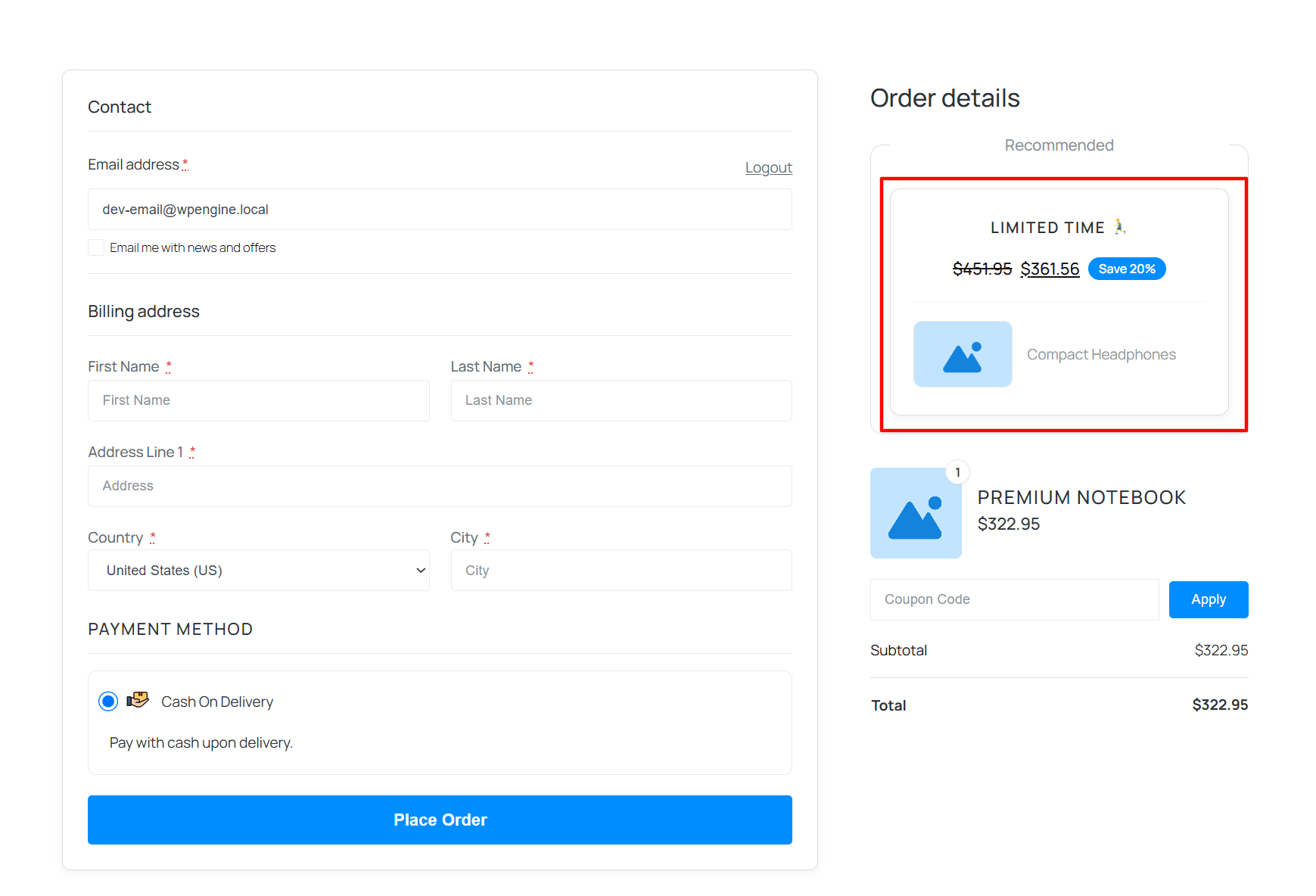
An order bump is a one-click add-on that appears at checkout — “Add [related product] for $X” — that the customer can include without leaving the checkout flow. Because the customer is already in purchase mode and the friction is just one click, order bumps typically convert at 10-30%, far higher than any standard upsell. StoreEngine’s Order Bumps addon lets you configure these on any product or cart combination.
Coupons and launch offers
For your first 100 sales, a time-limited launch discount removes the hesitation that stops first-time buyers. “20% off for the next 48 hours” creates urgency without permanently anchoring your price lower. Use StoreEngine’s Advanced Coupons to set percentage or fixed discounts with expiry dates, usage limits, and minimum order thresholds — so you control exactly how the offer works and when it ends.
A word of caution: do not lead with discounts in every channel before customers have even seen your regular price. Discounts work best as a nudge for people who are already considering buying, not as an acquisition strategy for cold audiences who have never heard of you.
Step 5: Turn every sale into a review and a referral
Your first 100 customers are not just revenue — they are your first source of social proof and your most cost-effective marketing channel. A customer who had a good experience and leaves a review does two things: they reduce the anxiety of every future visitor who reads that review, and they are statistically more likely to buy again (returning customers convert at 2-3x the rate of first-time visitors).
Get reviews automatically
Send a post-purchase email 5-7 days after delivery asking for a review. Keep it short: one sentence of gratitude, one sentence of context (“Your feedback helps other customers decide”), and a direct link to leave the review on the product page. Products with at least five reviews are 270% more likely to be purchased than those without any — five reviews is a meaningful milestone for every product.
Ask for referrals explicitly
Most satisfied customers will not refer friends unless you ask. A simple post-purchase message — “If you enjoyed this, we’d love a share” with a referral link or social share button — activates a channel that costs you nothing. StoreEngine’s Affiliate addon lets you formalize this into a proper referral program where customers earn a commission or store credit for every referral that converts, which turns your best customers into an ongoing acquisition channel.
Step 6: Read your store’s data before you scale
New store owners often make the mistake of scaling before they understand what is working. Running more traffic to a store that converts at 0.5% just accelerates losses. Before you increase your ad spend or content output, look at a few key numbers first.
StoreEngine’s built-in reports dashboard gives you order volume, revenue, and product performance in real time from your WordPress admin — no external analytics tool required for the basics. Connect Google Analytics for deeper funnel data once you are ready to go beyond the fundamentals.
What does reaching 100 sales actually unlock?
One hundred sales is not just a milestone — it is a turning point. By that point, you have enough data to know which products are working, which traffic sources are worth scaling, and which parts of your funnel need optimization. You have reviews on product pages. You have an abandoned cart sequence running. You have a small base of repeat customers who trust you.
More practically: 100 sales means you have proof. Proof you can show to suppliers negotiating better rates, to collaborators considering a partnership, to investors or lenders if you want to grow faster. The store that grinds to 100 sales carefully — fixing friction, earning trust, understanding the data — is in a far stronger position to scale than one that hit 100 through a single lucky viral moment without any of the infrastructure behind it.
The Bottom Line
Getting to 100 sales is a problem of friction and focus, not budget. Fix the checkout, start narrow, recover abandoned carts from day one, and turn each customer into a review and a referral. The stores that reach 100 sales fastest are the ones that build a clean buying experience first — and then bring people in to experience it.
Frequently asked questions
How long does it realistically take to get the first 100 sales?
It depends heavily on the product, the audience, and the marketing effort — but for most new stores, 3 to 6 months is a realistic window with consistent effort. Stores with an existing audience (email list, social following, or personal network) can reach 100 sales in the first few weeks. Stores starting completely from scratch with zero audience typically need longer, and should plan their budget and expectations accordingly.
Should I run paid ads to get my first sales?
Only after your checkout is optimized and you have at least a handful of reviews on your product pages. Running paid traffic to a store with a broken checkout or no social proof is expensive and discouraging. Start with your personal network and organic channels to get the first 10-20 sales and reviews, then introduce paid traffic to accelerate what is already working.
How important is checkout speed for getting first sales?
Very. A one-second delay in page load time reduces conversions by roughly 7%. For new stores on WordPress, this means choosing a lightweight eCommerce plugin that does not bloat your site with code you are not using. StoreEngine is built to stay lean — you enable only the addons you need, so your store stays fast as you add features rather than slowing down with every plugin.
What is the single most impactful thing a new store can do?
Set up abandoned cart recovery before you launch. It is the highest-ROI action available because it recovers revenue from people who were already interested enough to add your product to their cart. Every day you run traffic without abandoned cart recovery, you are leaving 10-30% of potential sales on the table.