


The right fulfillment strategy depends on your order volume: below 500 orders per month, in-house fulfillment is typically cheapest; above 1,000, a 3PL’s economies of scale usually win; and dropshipping trades margin for zero upfront inventory risk. Fulfillment costs eat 10-15% of revenue for most DTC brands, so this decision directly shapes your profitability. Here is how each model works and when to switch.
💡 Quick Takeaway:
Fulfillment is not just a cost center — it is a margin lever. At $5M revenue, a 2% fulfillment efficiency gain is worth $100,000 in annual profit, more than most marketing optimization projects deliver. The break-even point between in-house and 3PL sits at roughly 500-1,000 monthly orders for most merchants.
What are the three main fulfillment models?
Every product you sell has to travel from a shelf to your customer’s door. The three dominant models differ in who owns that journey — you, a logistics partner, or your supplier.
None of these is universally better. Each wins at a specific stage of business, and most successful stores move between models — or combine them — as they grow.
When does in-house fulfillment make sense?
In-house fulfillment means full control: your packaging, your quality checks, your shipping cutoffs. For new stores shipping under 500 orders per month, it is almost always the cheapest option because you have no minimums, no onboarding fees, and no per-pick charges. Your main costs are packaging materials, carrier postage, and your own time.
The strengths
The limits
In-house fulfillment stops scaling when your time becomes the bottleneck. Self-managed operations typically see order error rates of 2-5%, and every mis-pick costs a replacement product, return shipping, and customer service time. When founders are spending more hours packing boxes than growing the business, the hidden cost of in-house has exceeded its visible savings. Merchants also routinely undercount in-house costs by missing labor overhead, equipment, and management time in their calculations.
When should you switch to a 3PL?
A 3PL is a company you hire to run fulfillment for you. You ship inventory to their warehouse; they store, pick, pack, and ship as orders come in — usually within one to two business days. The global 3PL market reached $1.26 trillion in 2025 and is projected to hit $2.5 trillion by 2033, reflecting how thoroughly outsourced logistics has become the default at scale.
The economics
The most cited 2026 benchmark: 3PL breaks even against in-house at roughly 500-1,000 monthly orders. Below that, minimums and fees outweigh the savings. Above it, two forces flip the math. First, 3PLs negotiate carrier rates at volumes no independent merchant can match — discounted shipping rates save 15-40% versus merchant retail rates, and those savings often offset the 3PL’s fees entirely. Second, shared warehouse costs mean you pay only for the space and labor you actually use.
Typical 2026 pricing runs $3.50-8.00 per order for standard single-item pick-pack-ship (excluding carrier charges), with storage at $15-25 per pallet monthly. At mid-volume (500-2,000 orders/month), most sellers pay $4-10 per order all-in. High-volume brands (5,000+) negotiate down to $2.50-4.00.
What to watch for
When does dropshipping fit?
Dropshipping removes inventory from the equation entirely. You list products, the customer orders, and your supplier ships directly to them. You never buy stock upfront, which means zero inventory risk and near-zero starting capital — the reason it remains the most popular entry point into eCommerce.
The trade-offs
What you save in inventory risk, you pay in margin and control. Suppliers charge higher per-unit prices than bulk wholesale, which compresses your profit on every sale. Shipping times depend entirely on your supplier, quality control happens after the customer already has the product, and the same catalog is often available to hundreds of competing stores. Dropshipping works best as a validation strategy — test which products sell before committing capital to inventory — or in niches where suppliers are fast, reliable, and preferably local to your customer base.
The hybrid pattern
The most common mature pattern is hybrid: dropship new or slow-moving products to test demand, then bring proven sellers in-house or to a 3PL where margins are healthier. This turns dropshipping into your product research channel rather than your entire business model.
How StoreEngine supports every fulfillment model
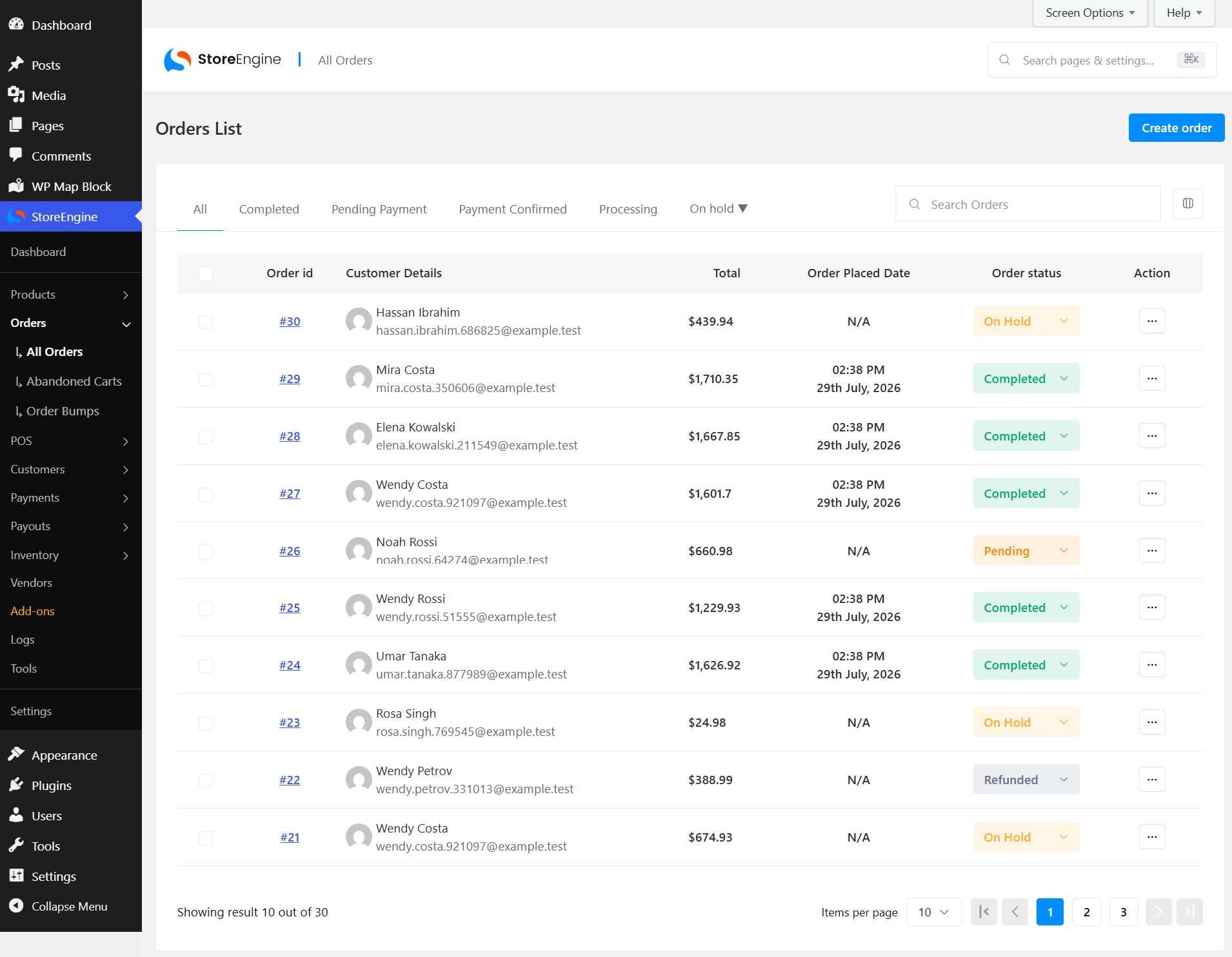
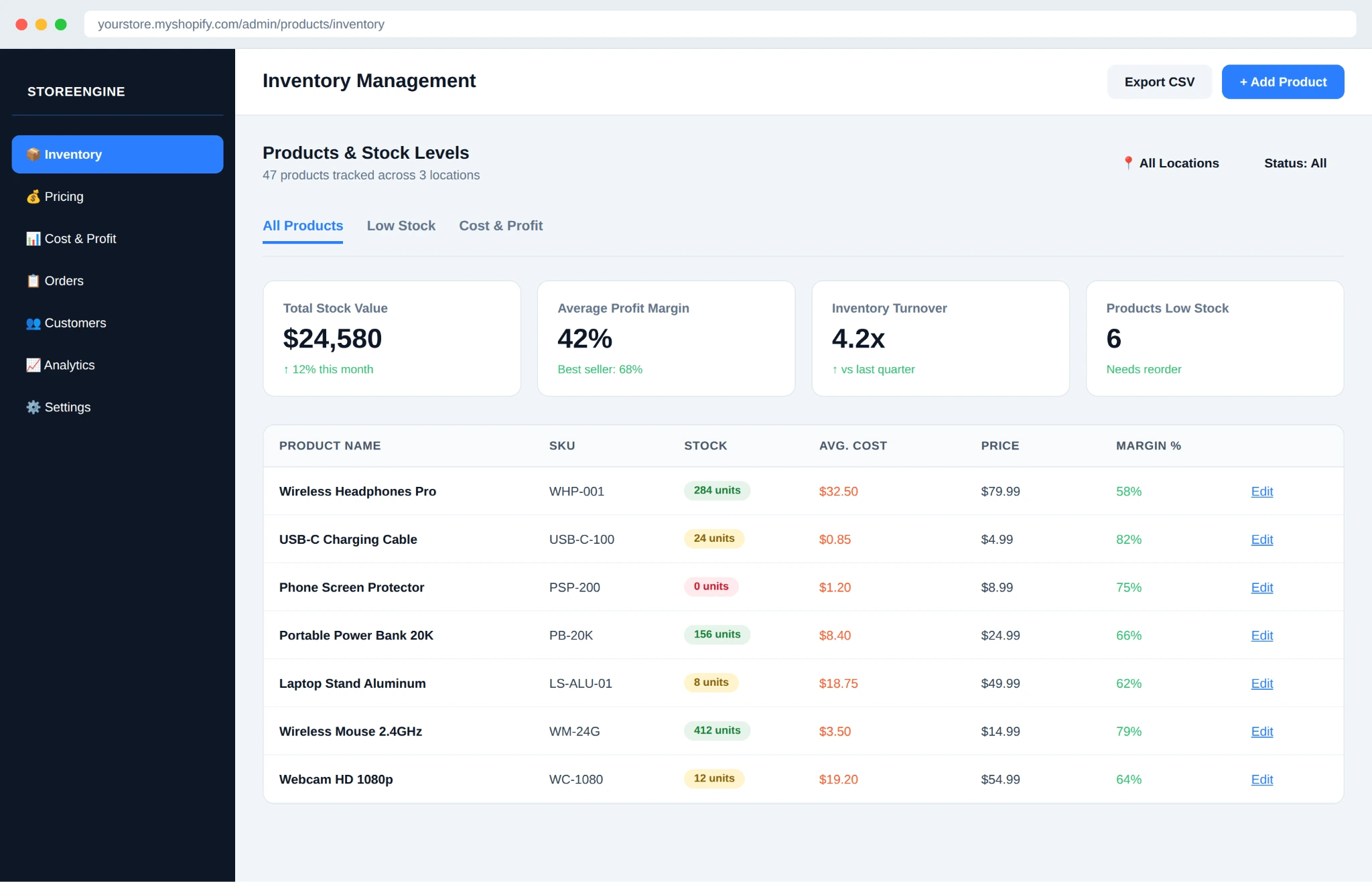
Your fulfillment strategy will change as you grow — which means your store platform needs to support all three models without a rebuild. StoreEngine handles this from one WordPress admin.
The Bottom Line
There is no permanently correct fulfillment model — only the right one for your current volume, margins, and growth stage. Start in-house while orders are small and control matters most, validate new products through dropshipping without inventory risk, and move to a 3PL when volume makes their carrier discounts work in your favor. Whichever mix you run, keep your orders, stock, and margins in one system so that switching models is a decision, not a migration.
Frequently asked questions
At what order volume should I switch from in-house to a 3PL?
The 2026 benchmark is 500-1,000 monthly orders. Below 500, in-house is typically cheaper because 3PL minimums (averaging around $500/month) and per-order fees outweigh the savings. Above 1,000, the 3PL’s discounted carrier rates — 15-40% below merchant retail rates — and shared warehouse costs usually make outsourcing the better deal. Between those numbers, run the comparison on your actual cost per order, counting your own labor time honestly.
Is dropshipping still profitable in 2026?
It can be, but as a starting strategy rather than an end state. Supplier pricing compresses margins, and popular catalogs are shared across many competing stores. The stores that succeed with dropshipping either operate in niches with fast, reliable suppliers, or use it as a validation layer — testing products with zero inventory risk, then moving proven sellers to bulk inventory where the margin is meaningfully higher.
What does a 3PL actually cost per order?
In 2026, standard single-item pick-pack-ship runs $3.50-8.00 per order, excluding actual carrier shipping charges. Storage adds $15-25 per pallet monthly. All-in, mid-volume sellers (500-2,000 orders/month) typically pay $4-10 per order, while high-volume brands negotiate to $2.50-4.00. Always compare the full fee stack — receiving, storage, returns, minimums, and peak surcharges — not just the headline pick-and-pack rate.
Can I run multiple fulfillment models at the same time?
Yes, and most growing stores do. A common hybrid: proven best-sellers ship from a 3PL for speed, fragile or personalized items ship in-house for control, and new product tests run as dropship until demand is validated. The key requirement is a store platform where orders, inventory, and margins for all three models live in one system — so the complexity stays in your strategy, not your admin.